
Unique Stories
One-of-a-kind works, each with its own story
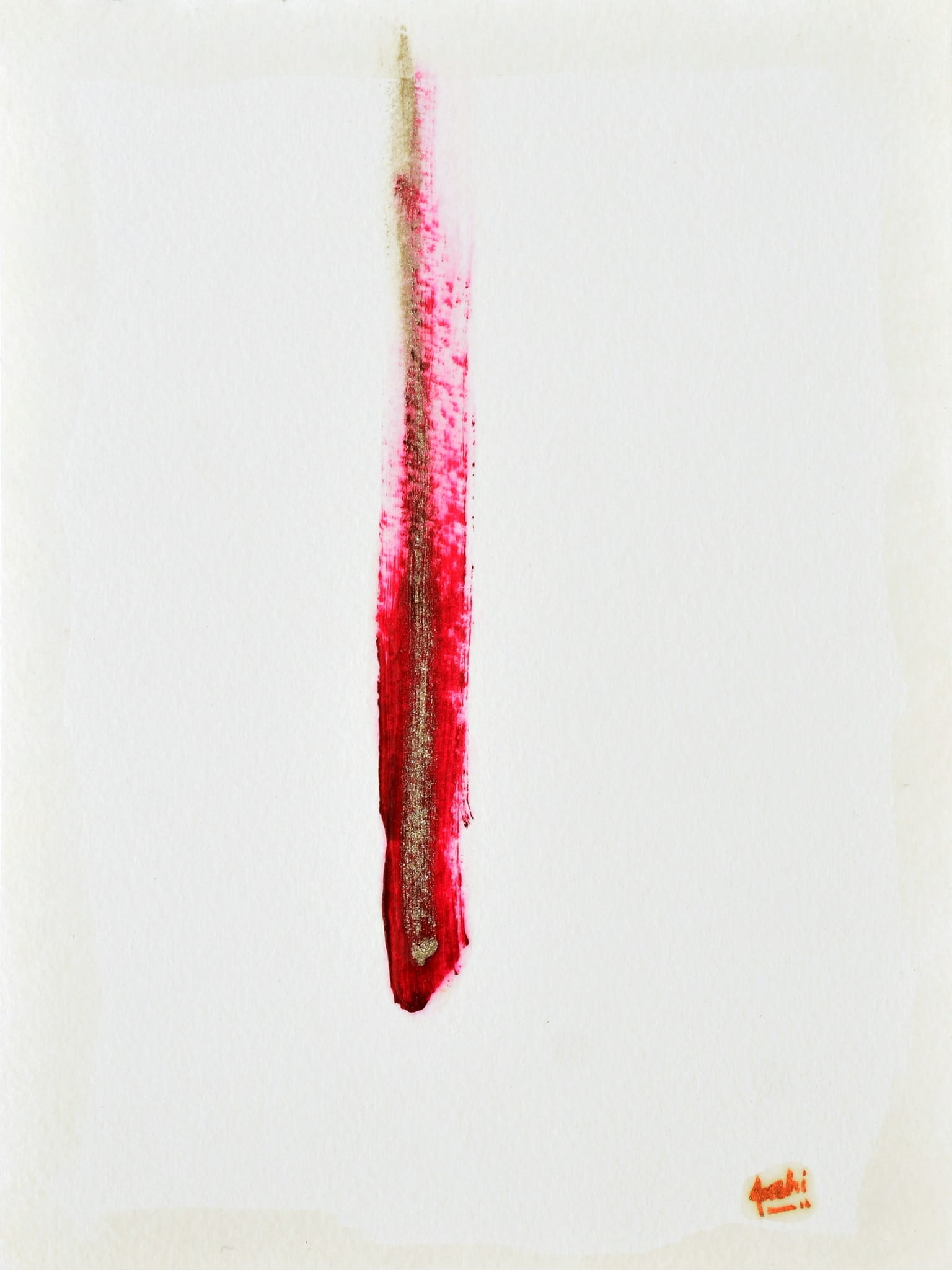
Sindoor – Red
Materials Lipstick, eyeliner and nail paint on paper
Size A5 · 14.8 × 21 cm
Rarity Unique (diptych panel)
Medium Mixed media
Signature Hand-signed by artist
Frame Framed
Certificate Included
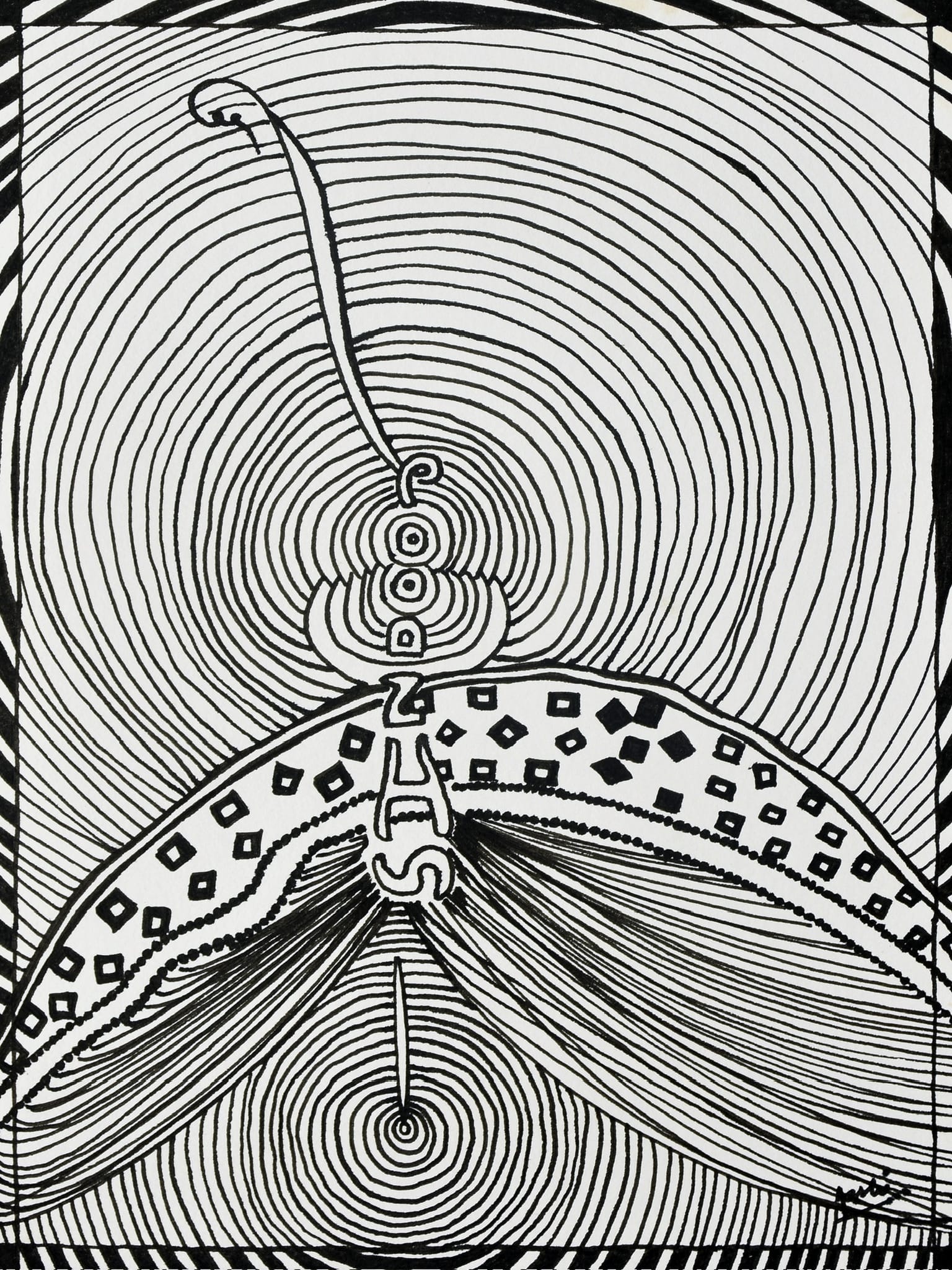
Sindoor – Black and White
Materials Pen on paper
Size A5 · 14.8 × 21 cm
Rarity Unique (diptych panel)
Medium Drawing
Signature Hand-signed by artist
Frame Framed
Certificate Included
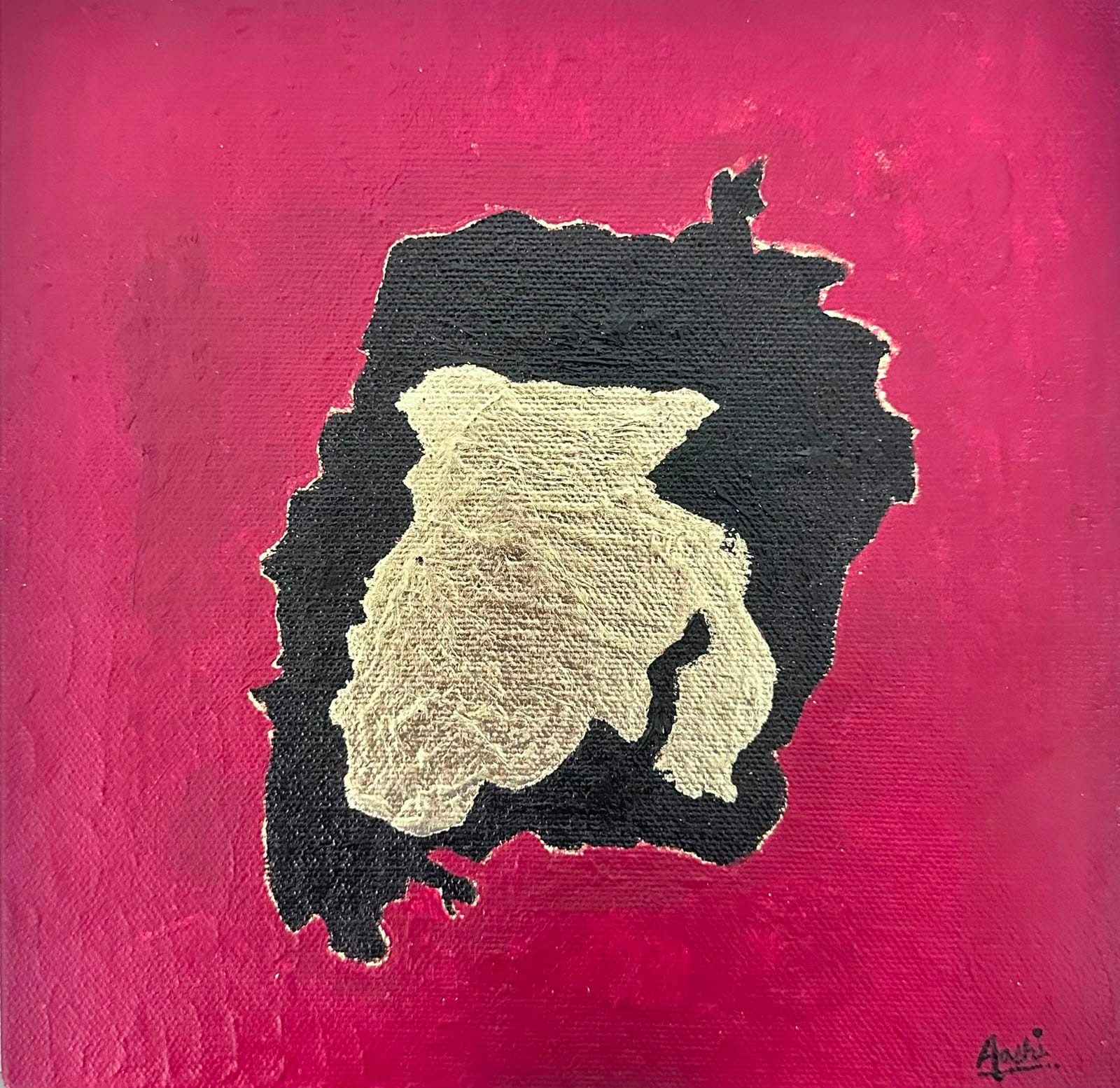
Loktak
The artist dedicates this piece to Dr Ronaldo Laishram’s discovery of the 12.6 billion years old protocluster of galaxies that he named “Loktak”, due to the similarities in the appearance of the galaxies in the protocluster and the phumdis found in Loktak lake of Manipur, Laishram’s homeland.
In this work the black outline is that of Manipur, and the inner shape is that of Loktak lake.
Meaning: From the energetic origins of the universe (red), within the vast expanse of cosmic space (black), emerges the golden Loktak protocluster, carrying the name of Manipur’s Loktak into the language of the stars.
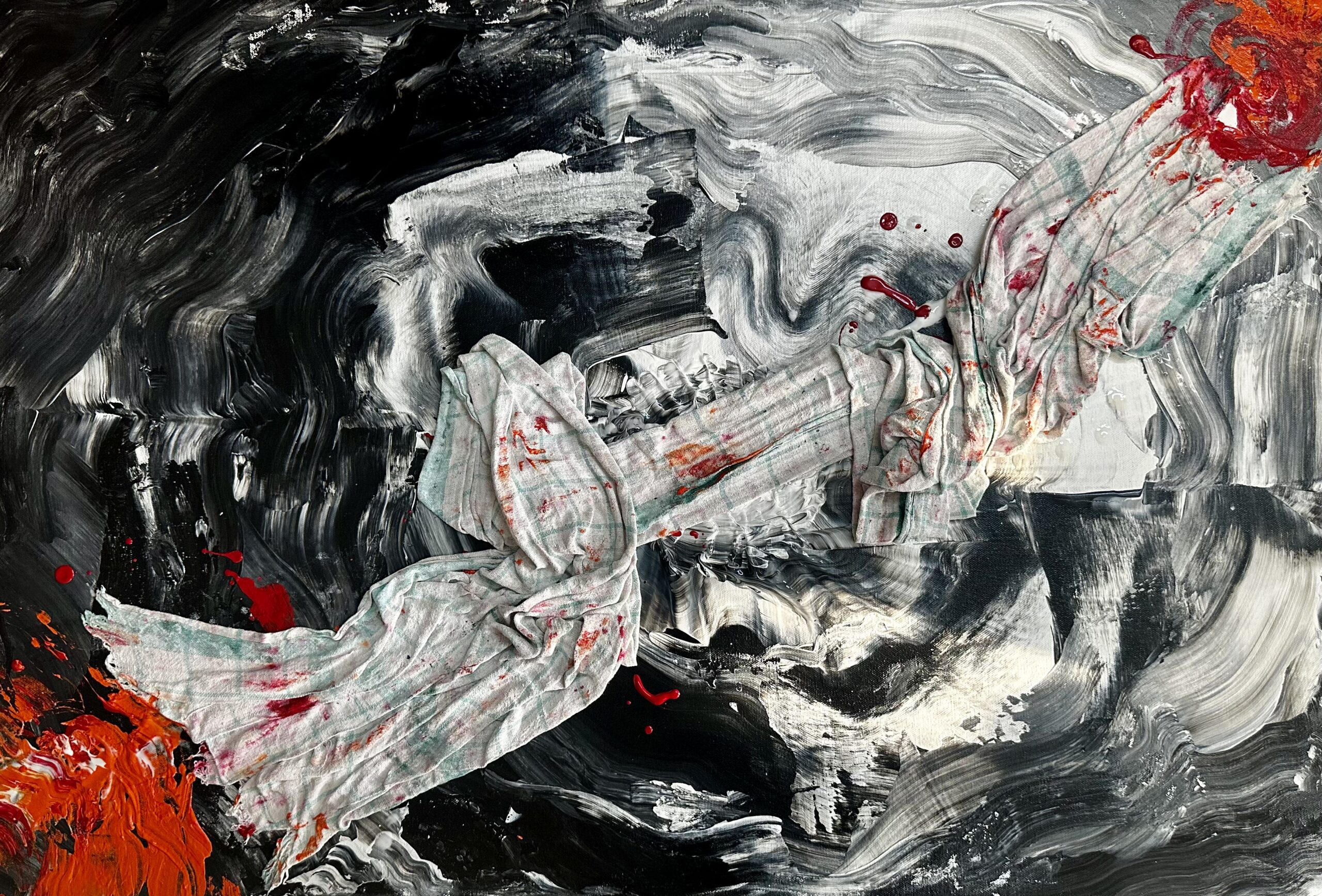
Bhav
Bhav is emotion, intention, inner disposition, the unseen motive that gives meaning to any act.
The composition unfolds across a monochromatic field divided into light and dark, not as absolutes, but as coexisting states. From opposing diagonal corners emerge two vivid orange red entities, their intensity heightened against the black, white, and grey ground.
These entities are connected by a gamcha, a humble cotton scarf widely used by Indian farmers and working class communities bridging presence and vulnerability.
The background is rendered in greys rather than absolutes, underscoring the belief that suffering, like emotion, is relative defined by context and time.
The gamcha carries lived history. It was given to the artist by an unknown woman on a rainy day to cover her drenched transparent kurta, an unprompted act of solidarity that became the emotional nucleus of the work.
The narrative echoes Draupadi’s disrobing from the Mahabharata, where cloth appears at a moment of ultimate vulnerability. Here, the intervention is human, anonymous, and materially modest yet morally immense.
Red and orange reject emotional neutrality. They assert urgency, empathy, courage affirming that emotion is not passive; it acts.
At its core, Bhav asserts that intention outweighs material value. A simple cloth, offered freely, became everything needed to feel safe in that moment.
Sindoor: A Diptych
Sindoor is not decoration.
It is memory.
It is promise.
It is the quiet strength carried forward when words fall short.
Sindoor: A Diptych addresses the intimate cost of terrorism and the collective response of a nation when that cost becomes unbearable.
The work centres on women because when violence enters a country, it most decisively enters their lives. Marriage, family, protection, and continuity are the first to be unsettled, and often the first to be destroyed.
Sindoor – Red
In Indian cultural tradition, sindoor is the vermilion worn by married Hindu women as a marker of marital bond and shared life.
Created using materials associated with marital adornment (lipstick, eyeliner, and nail paint), this panel presents a deep red form shaped like sindoor against a white background.
Here, white signifies peace.
The red embodies sindoor itself: love, the sanctity of matrimony, prosperity, happiness, and family.
A fine golden line rests above the red, signifying protection and dignity.
Sindoor – Black and White
The final letter is elongated and violently smudged, opening into a wound.
She has lost her suhaag.
Following the Pahalgam terrorist attack, India carried out Operation Sindoor.
The Diptych as a Whole
Together, the two works hold wholeness and erasure, peace and fury.